Thursday, April 26, 2012

Fun With Names

I've been having fun exploring the White Pages "Names" page.  I learned that my name, Gale, was most popular in 1957,  and is going out of style (0% of babies and teens have this name...which probably doesn't mean NONE have it, but just such a small amount it didn't register).  Alas...well, maybe my grandkids will help change that *grin.*

They also have name stats listed by state.  My name seems to be most popular in the midwest, per capita.  But it has the most listings in California, Texas and Florida...which I find funny since I lived in two of those states, but then, ALMOST ALL NAMES have more listings there just because of population!

Here's the most popular names in California and Texas...

California

Most Popular First Names in California

Most Popular Last Names in California

  1. Garcia
  2. Hernandez
  3. Lopez
  4. Martinez
  1. Smith
  2. Rodriguez
  3. Gonzalez
  4. Johnson
 Texas

Last name

  1. Garcia
  2. Smith
  3. Martinez
  4. Rodriguez
  1. Hernandez
  2. Johnson
  3. Williams
  4. Jones


Not surprized that Maria and Garcia top the charts in both states.  Most of the names were the same in both states, though the orders were different.  I've put the different names in BOLD.

And, just for comparison, here's a NON-WESTERN state:

Massachusets

(Names shared with NEITHER Texas or California are bolded)


I also found hilarious the LEAST POPULAR names from 1910 to the present:


Wednesday, April 25, 2012

Wildflower or Weed?

Thanks for joining me on my continuing hunt to find out what grows wild in my yard and whether it's edible or useful (or a pest that causes of allergies, has prickers, etc.).  Today I want to look at two plants that Ty at the Texas Garden Web Forums helped me Identify. I was hoping they'd have some useful properties (other than looking kinda pretty) but can't find anything about them being edible or medicinal, and their seeds have been described as "annoying balls of velcro" that get  stuck in pet hair (joy.)   These is not a native...but European plants that found its way here and took over.


PLANT #1:  Torilis nodosa
(Knotted Hedge Parsley)

First, the one I THOUGHT might be carrots....

You see, year before last I left some seed packets out accidentally and they blew across my yard.  The next spring I had two carrots grow in a corner I hadn't planted them.  Then after a fire in my backyard hundreds of what seemed to be the same carrot plant sprouted up where the fire had burned.  Here's a picture of some:

What I Thought Were Carrots

I was all excited.  But alas, I think I got excited too soon.

Because here's what my full grown carrots look like (and several more of these did pop up, which is cool):


Actual Carrot Leaves

But this is what the hundreds of little plants grew into...


Torilis nodosa (Leaf Pattern)

As you can tell, it looks very different than the carrot.  While it started with the same sort of lacy rosette of leaves the carrot has, the stem soon split apart into branches and the leaves stayed the same size.  It has flowers that grow on the stem near the leaf nodes, not up at the top like Yarrow or Queen-Anne's-Lace.   The root smells sort of carrot-like.  I can tell you already it's invasive.  Man, I wish these had been carrots!


Plant #2:  Probably Torilis arvensis
(Spreading hedge parsley)

  It's root's also smell carroty, and it has similar leaves, but the flower grows at the top, more like like Yarrow or Queen-Anne's-Lace.  Actually, it VERY much like Queen-Anne's-Lace except the top flowers are smaller and lack the leaves right under the base of the flower shown in this illustration.

 Plant #2


Plant #2 (Blooms)


I am pretty sure this is Torilis arvensis (Spreading Hedge Parsley).   It's root's also smell carroty, and it has similar leaves, but the flower grows at the top, more like like Yarrow or Queen-Anne's-Lace.  Actually, it's VERY much like Queen-Anne's-Lace except the top flowers are smaller and lack the leaves right under the base of the flower shown in this Queen-Anne's-Lace illustration.  As it's name suggests, it's invasive too (but it's at least prettier than the other one).

Oh well.  Time to get the weed whacker out again!


Wednesday, April 18, 2012

What to Plant in April in Texas


1. Cantaloupes, 2. Collards, 3. Corn, 4. Cucumber, 5. Cushaw (and Pumpkins) 6. Eggplant, 7. Melons (honeydew), 8. Lima Beans, 9. Luffa, 10. Malabar Spinach, 11. Okra, 12. Peppers, 13. Pumpkin., 14. Snapbeans (19), 15. Southern Peas, 16. Summer Squash, 17. Sweet Potatoes, 18. Swiss Chard, 19. Tomato* 20. Watermelon

*On tomatoes plant transplants (too late to plant from seed)

These are some plants which are great for planting in April here in Texas.  I've been learning all about the best time to plant different plants from a book called Month-to-Month Gardening in Texas, which not only shows when to fertilize, aerate your soil, tackle weeds, etc.. But, if you just want info on what veggies and herbs to plant each month, you can also get that information online at one of the resources listed here.). 


I found the photos for my mosaic on Flickr, and the photographers were nice enough to offer up for use through Creative Commons (click on the links to see the photos larger).  Yes, the Sountern Peas (ie cowpeas) in that picture are blighted (that was just a hard one to find, so I took what I could get.)

I'm linking up at the gardening linkies at Garden Club Thursday and...


(Post recycled from last year).

Texas Gardening Resources

Useful Texas Gardening Resources

Here's some online resources for gardeing in Texas:

For Finding Planting Times 
General Resources
Regional Resources
Wildcrafting Resources
Apps
      Recommended Books

      Month by Month Gardening in Texas: What to Do Each Month to Have a Beautiful Garden All YearMonth-to-Month Gardening in Texas is an excellent book for anyone new to Texas.  It helps you learn what to plant when, when to fertilize (and what fertilizers work best in Texas), and much, much more.  If you didn't know that there were veggies you can plant in the middle of winter, or that there was such a thing as cool season and warm season annuals, or are finding that the things you did to help your garden thrive somewhere else aren't working here, then this is the book for you!  This is my MOST RECCOMMENDED gardening book for newcomers to Texas!  See my full review here.


      I'd reccomend anything by Howard Garret, but especially his books on organic gardening, such as Texas Organic Gardening.  I read several of his books the summer I worked at The Herb Market in Carrollton, and they were all excellent.

      Monday, April 16, 2012

      Today's Flowers - Garden Bloom Day

      What's blooming in my garden?

      First, what was planted (by me)...


      Gazania rigens - African daisy


      Flowering Chives


      Morning Glory


      Salvia


      Marigold

      Those my neighbor planted...
      (creeping through the fence)


      And these nature planted for me...


      One Texas Bluebonnet
      (Literally one, in the smack dab middle of the yard,
      but I want more so I'm mowing around it.)


      Some Texas Dandelion (a lot more than one)


      I don't know what...would love to know!
      The flowers look similar to wild carrot,
      but they are at every leaf intersection
      down the stem, and much smaller.

      (Oh no...I found out...a weed!)

      Another mystery weed/wildflower


      Dakota Vervain 


      Texas Vervain


      Wild Evening Primrose


      ---


      Friday, April 13, 2012

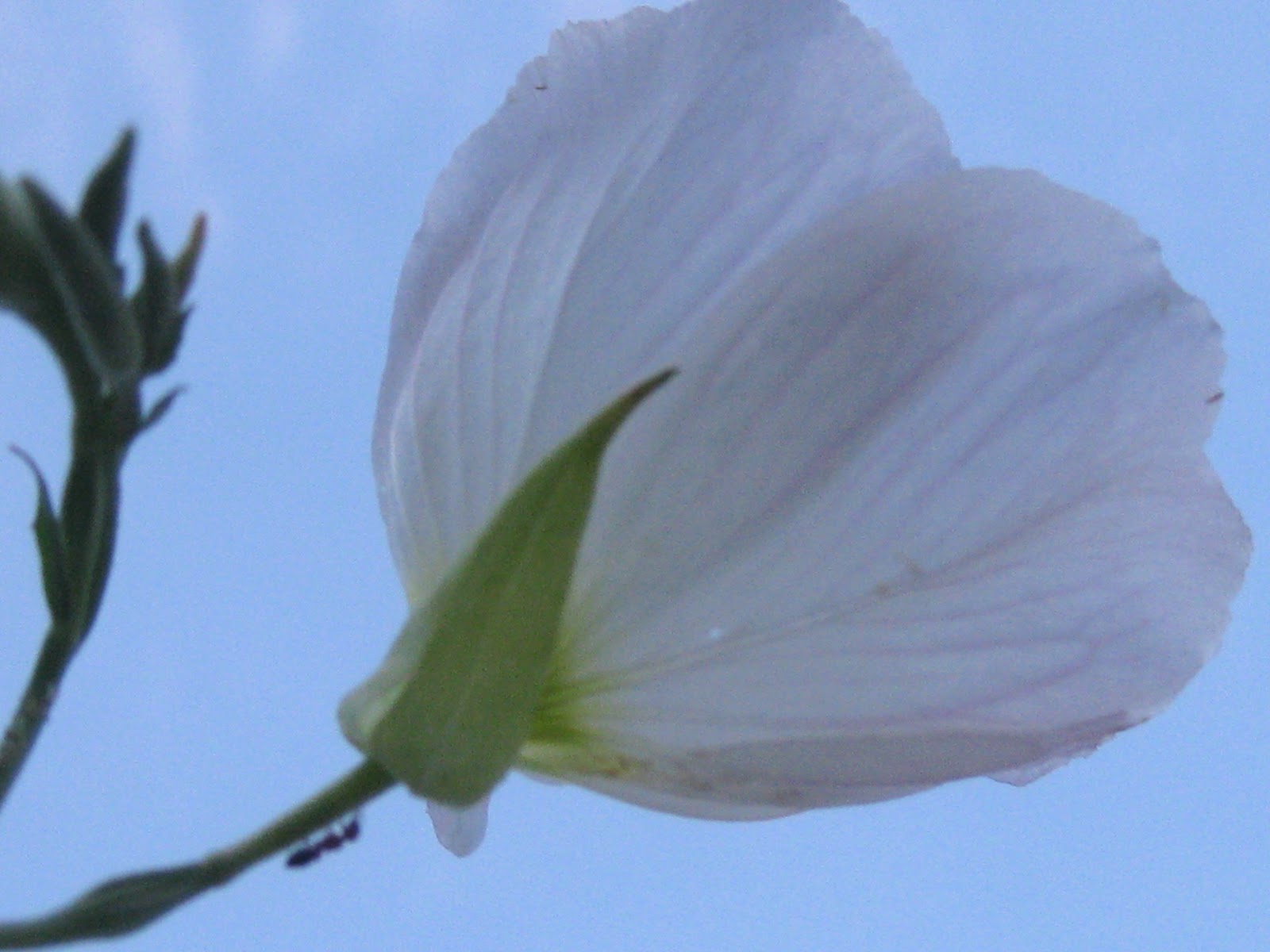
      Sky Watch Friday - Flora and Fauna, From a Bugs-eye View


      1st Trio:
      Wild Primrose

      2nd Trio:
      Bolting Oak Leaf Lettuce
      Plantain
      Goldenrod

      3st Trio:
      Wildflower - Unknown
      Flowering Chives - Just budding
      Flowering Chives - In Bloom


      ---

      Sky Watch Friday
      Blooming Friday
      Pink Saturday